City Model
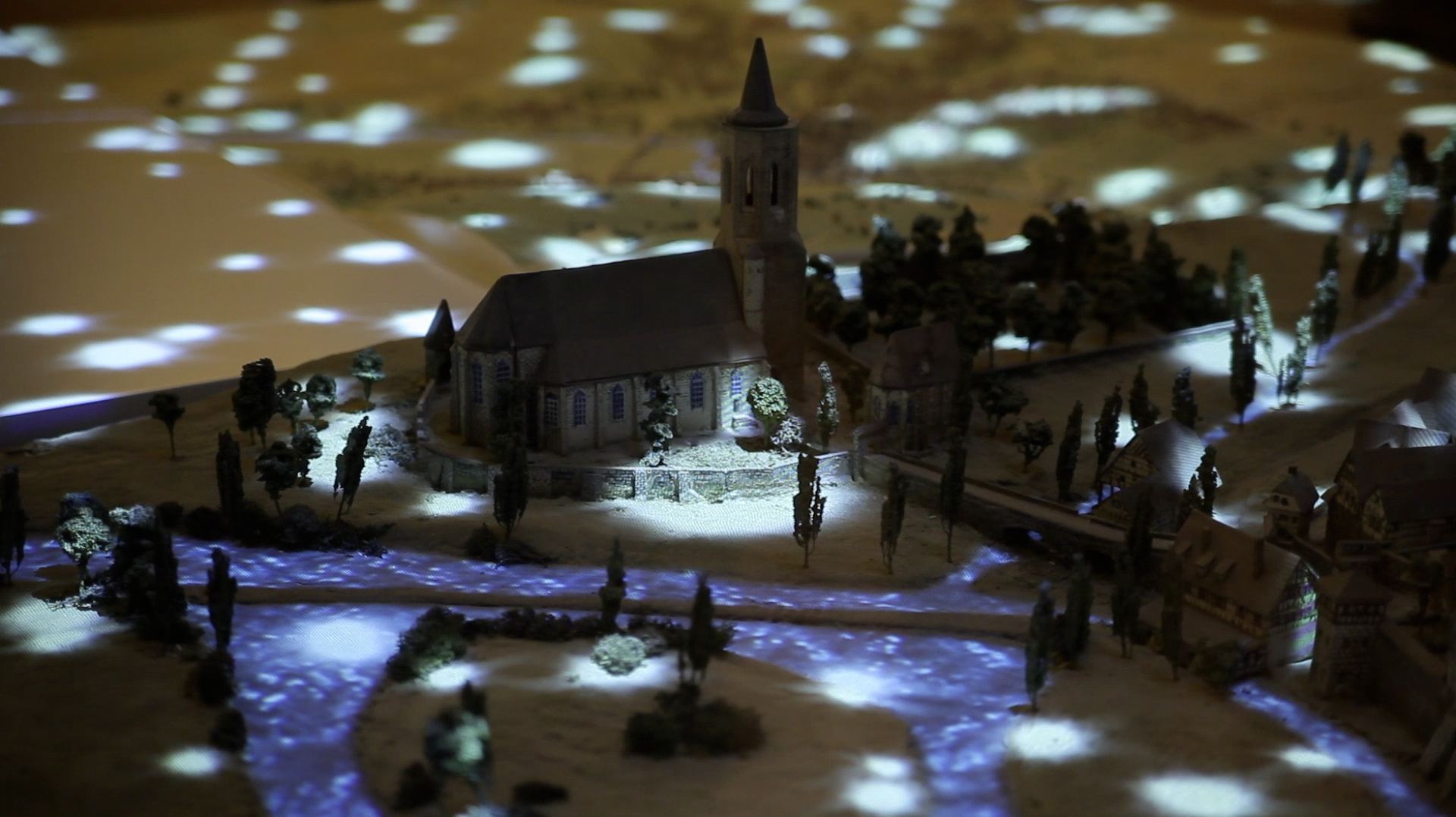
Projections and sound animate the model to show how Waiblingen expanded over time, while adjoining rooms use music and audio plays to connect urban development with everyday lives. Local history is transformed from static display into a multi-room experience.

Projection as urban timeline
Tamschick Media+Space developed a concept in which projection mapping animates the model of Waiblingen and visualizes how the town grew beyond the Rems River, added roads, and entered the age of rail and automobiles. Adjoining rooms extend the narrative: an orchestral sound piece mixes bells, clocks, and environmental sounds, while a series of audio plays link historical moments to individual stories. The overall scenography ties these elements into one continuous journey through time.


Immersion Through Time
Visitors first encounter the animated city model, where motion graphics and narration trace the town’s spatial evolution. In the next space, layered soundscapes and music evoke the atmosphere of different eras and public spaces. Finally, four audio play episodes present personal accounts from former residents, bringing the city’s history down to a human, intimate scale.




Static Model into Living City
The brief was to turn a conventional city model into a compelling storyteller that would engage school classes, residents, and visitors equally. The installation had to connect topography, architecture, transport, and social change, while fitting seamlessly into the existing museum spaces and curatorial framework.


The installation refreshed how Waiblingen’s history is presented, making spatial and social change legible at a glance and over time. It strengthened identification with the city among residents and provided school groups and visitors with a memorable, accessible entry point into urban history.
Project Highlights

- Projection mapping onto a detailed city model of Waiblingen
- Multilayered audio journey combining narration, music, and ambient sound
- Four-part audio play linking historical events to individual life stories
- Permanent museum installation designed for long-term operation
Facts & Figures
Lead agency and scenography: Space4
Hardware planning and technical implementation: inSynergie
Audio play production, music and sound design: Klangerfinder


